

When I become aware that I belong to one species among the billions that have existed, on a planet called Earth that orbits the Sun, one of 200 billion stars in our galaxy, itself one of 2 trillion galaxies in the visible universe, it's likely that my habitual identity — my everyday concerns, my ego, my personal story — loses some of its relevance, and my life may seem insignificant. Yet at the same time, when I become aware that I am the result of 13.8 billion years of cosmic evolution, that stardust flows through my veins, and that the universe looks at itself through my consciousness, my image in the mirror changes: from "I am an individual in the world" to "I am the cosmos in human form." Suddenly, my life gains considerable importance. In other words, exploring my cosmic roots reveals two essential poles of my identity: my nature as both insignificant and extra-ordinary.
This awareness nurtures two qualities essential for navigating life: humility and self-worth. It's worth noting that this dual perspective is not new — it lies at the heart of several contemplative traditions — but autocosmology gives it a contemporary scientific grounding that makes it accessible to people who don't identify with traditional spirituality.
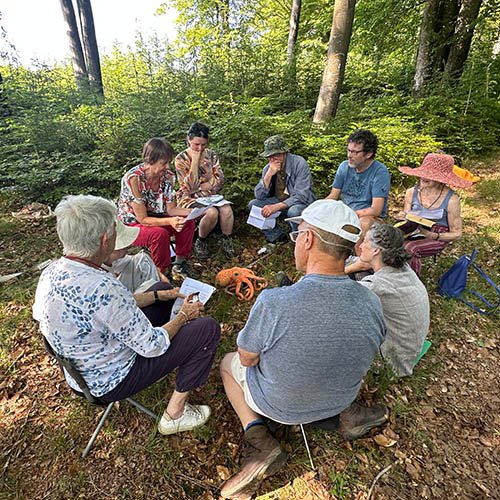
One of the great sufferings of contemporary consciousness is ontological loneliness — the feeling of being an isolated individual in an indifferent universe. Autocosmology offers a radical response to this suffering: I am not alone, I am part of a universal family whose ancestors were born 13.8 billion years ago, and I am kin to the fish, the ocean, and the supernova. "Being a universal family" is not a metaphor — it is a profound reconfiguration of my identity and my relationships with others. As Thomas Berry put it, "the universe is not a collection of objects, but a communion of subjects." This dual transformation — of the relationship with oneself and with others — helps me find and live out my own place in the universe.

When I become aware that the water I drink has traveled for four billion years to all corners of the world, that the sensation of warmth on my skin results from an improbable encounter between two stars, that the miracle is not so much walking on water as walking on Earth, that human beings do not hold a monopoly on consciousness — the everyday is transformed. Every "ordinary" experience becomes extraordinary, a moment of wonder and gratitude that broadens awareness and reorients values, with no supernatural intervention required.
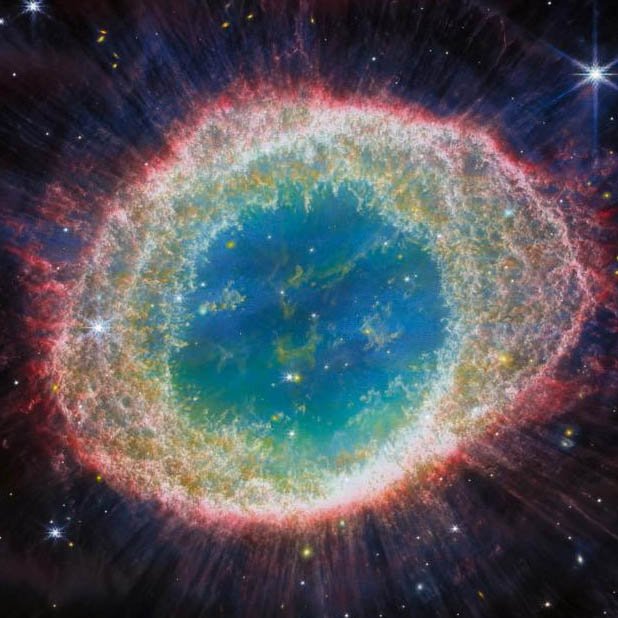
According to Brian Swimme, "consciousness is not a capacity of the universe, but a mode of being of the universe. We, as human beings, allow consciousness to awaken. Consciousness is not something a human being possesses or does — it is something that happens within them. We are its witnesses, we experience it." When human beings take part in a Deep Time Walk, the universe observes and reflects upon itself. My individual awareness is a manifestation of a universal experience — consciousness — which remains a great mystery.
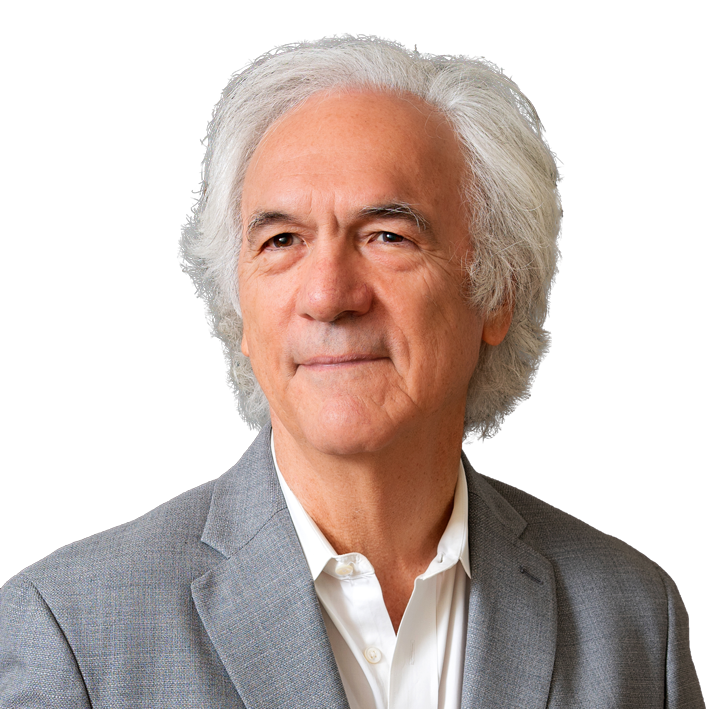
Brian Thomas Swimme is a professor at the California Institute of Integral Studies in San Francisco, and co-founder of the "Philosophy, Cosmology, and Consciousness" program. He is co-author of the foundational work The Universe Story (1992), written with his longtime mentor Thomas Berry, as well as The Journey of the Universe (2011), written with Mary Evelyn Tucker, The Universe is a Green Dragon (1984), The Hidden Heart of the Cosmos (1996), and Cosmogenesis: An Unveiling of the Expanding Universe (2022), an autobiographical essay in which he shares the evolution of his own awareness in the face of cosmogenesis. His work is devoted to the cultural, ecological, and spiritual implications of contemporary evolutionary cosmology, building on the legacy of Georges Lemaître, Pierre Teilhard de Chardin, and cultural historian Thomas Berry.